Posted by Unknown |

UNDERSTANDING 21ST CENTURY CULTURAL CHANGES: THE CHALLENGE OF THE AFRICAN STUDENT I


“Nigerian graduates are unemployable”                                                                                                                            - Okonjo iweala

“In as much as the Nigerian education system has not been wired to meet the demands of the 21st century students (Undergraduates and Graduates) to foster youth and economic productivity, I believe not all graduates are unemployable. Infact, Unemployability in itself is a mindset phenomenon.”                                                                                                                                                                - Obele Gospel Jesuite

Life in the 21st century as has been discussed previously, has a commitment to the social and economic renaissance of Africa.
The average undergraduate is committed with a view of coming out to make a meaning for themselves in a firstly competitive world. You must understand that the relevance of our tomorrow families, institutions, businesses, Nation and continent as a whole is frankly dependent on the sanity and balance of individuals in the institutions. The call is for them to tackle the responsibility that will inevitably fall upon them whether they are ready or not.

As a student you must know that what is coming will come, but its who you are that makes the difference. Definitely, all undergraduates and students would leave the system someday to meet the challenges of the outside world. The challenge basically is how ready are we to meet the odds that confront us.

As a 21st century Nigerian or African student, you must realise and understand you are a decade or more behind the developed world, and as globalization eases the free-flow of goods, persons and services, you would no doubt be compelled to compete eventually with your counterpart in developed and advanced nations. It’s quite unfortunate for us that the universities which are instituted to arm you with the requisite tools to live an effective and productive life is ill equipped to do so. The growing disparity between academic school curricular and the needs and challenges of an ever changing global economy are making the undergraduate less relevant in today world. Our institutions are out-modelled, our universities are like teachers trying to teach students the use of modern day computer with the mainframe. Taking a visit to our science laboratories, you would understand how disadvantaged we are in an age where science and technology is a key determinant of success and significance. Nigeria currently ranks one of the least literate nations in science and math in the world. Only less than one third of our university graduates today are in anyway ready of the challenges of work.

The problems inherent in our society today are suppose to be platforms for new innovations and opportunities for advancement, but we have been incapacitated so far, trained to cram academic theory postulated ages ago and never worked in the Nigerian/African economy.

“Education in Nigeria is neither an end nor a means to an end”                                                                           - Uzoigwe Daniel Chimezie.

The average university environment in this part of the world has become a platform for tussle for grades, certificates, political nuisance, whoredom, depreciating character of students, teaching methodology, unskilled lecturers etc. we have lost the value of mentorship, coaching, skill acquisition, freedom to explore your given potentials. To me, it’s a complete world of illusion in all facets.
Every student is a product of a teacher and all the system has to offer, if you say your future leaders (undergraduates and graduates) are unskilled and incapacitated, then it questions the capacity of teachers and the system as a whole.                                                                                                                             

We need to step up our game with the right skills and toolset to make ourselves globally competitive and more importantly, for a productive future.
Join me next Monday as we explore the way out of this, and fix this puzzle ourselves. Remember only Africans can save Africa. Have a great week Ahead!


Obele Gospel Jesuite is the Chief Responsibility Officer- Project Change Initiative (PCI), and a proud 21st century development economist. He can be reached at 08130070991, Gospel_obele@yahoo.com


Read more...
Posted by Unknown |

Oil industry in for a shake-up as Dangote moves in

Aliko Dangote, CEO, Dangote Group of Companies

When Shell Petroleum Development Company’s (SPDC) executive director, Malcolm Brinded said recently that building a refinery in Nigeria did not make good business sense, he apparently had not reckoned with Aliko Dangote.

Africa’s richest man, Dangote has a history of being a disrupter of most industries he chooses to play in, like cement, sugar, and flour, and his foray into the oil sector with plans for a new 400,000-barrel-a-day (b/d) refinery has the prospect of shaking up Nigeria’s stagnant oil and gas industry.

The immediate area where Dangote’s refinery investment may push the government into reforming is in the elimination of fuel subsidy, say analysts.

“We are encouraged by recent plans announced by Aliko Dangote to build a new local refinery with a 400kb/d capacity, which should improve pricing terms for local producers,” said Renaissance Capital oil and gas analyst Lldar Davletshin.

“If a local refinery buys crude at world price it will then have to sell refined product with a mark-up, which would mean much higher domestic prices if no subsidy is provided,” Davletshin said.

Nigeria’s gross domestic product (GDP) grew steadily at about 7 percent per annum over the past 10 years with a population of 167 million.

Analysts say the country’s energy thirst is rapidly increasing (from the currently extremely low 300kb/d level), which should make the current fuel subsidy regime unsustainable in about three years, just as Dangote’s new refinery is coming on stream.

Refining “is an excellent business to get into,” Dangote said in an interview in May, suggesting it will be in a position to make a profit, by selling at international rates to fuel marketers.

The refinery would also shake up the entrenched international oil companies (IOCs) in Nigeria, as well as the notoriously opaque national oil company – NNPC, which has the poorest transparency record out of 44 national and international energy companies, according to Transparency International and Revenue Watch Institute.

The NNPC gets an allocation of 445,000bpd of crude oil to refine locally, but it has been selling itself this oil at cut-down prices, a practice that cost Nigeria $5 billion in potential revenue between 2002 – 2011, according to a 146-page report by Nuhu Ribadu, former head of the anti-corruption agency, EFCC.

Dangote’s new refinery would immediately double Nigeria’s refining capacity and reduce dependence on NNPC decrepit refineries as well as cut imports from refiners owned by the IOCs by up to 50 percent.

Its expected 100 percent capacity utilisation may convince the government and prove to sceptics of the need to privatise Nigeria’s four state-owned refineries.

Dangote’s new refinery, fertiliser and petrochemical complex would cost $9 billion. This compares with the NNPC $4.5 billion deal with an unknown ‘Vulcan Group,’ to build six modular refineries with a combined capacity of 180,000b/d, signed since early 2012, which has remained largely on the drawing board.

Nigeria, which is Africa’s top producer of crude oil, relies on fuel imports to meet more than 70 percent of its needs. Four government-owned refineries with a combined capacity of 445,000b/d are operating at a fraction of that because of corruption and poor maintenance.

Nigeria spent over N1 trillion ($8bn) on fuel subsidy payments last year, equivalent to 20 percent of the total federal budget, according to finance ministry data.

“Removing the fuel subsidy would be a major step forward in the reform process in Nigeria,” Samir Gadio, an emerging markets strategist, at Standard Bank, London, said, saying “clearly, this inefficiency is a major constraint on the country’s economic emergence which will eventually have to be addressed.”

President Goodluck Jonathan attempted to remove the subsidy in January 2012, but was forced by a wave of strikes and protests to partially reinstate it, at a reduced price of N97 per barrel. Another attempt by the government at deregulation would only come after the elections in 2015, according to FBN Capital.

The oil and gas industry accounts for 70 percent of the Federal Government budget and 90 percent of the nation’s dollar earnings. The Petroleum Industry Bill aimed at reforming the industry is currently stuck in the National Assembly, although Dangote’s move to establish a refinery may have already set in motion a reform of the industry.
- BusinessDay
Read more...
Posted by Unknown |

China, Kazakhstan to ink deals worth $30 billion on Saturday

China's President, Xi Jinping

Kazakhstan and China will sign 22 agreements on Saturday worth a total of around $30 billion, including several deals in the key oil and gas sector, Kazakh President Nursultan Nazarbayev said.

“Among these (agreements) there are large-scale ones, including on cooperation in the oil and gas sector, which are essential for us,” Nazarbayev told a briefing after meeting with China’s President Xi Jinping.

“We have reached an agreement on building a new oil refinery (in Kazakhstan), which we need so much,” Nazarbayev said, without giving further detail.

Xi said the two sides had agreed on China’s shareholding in Kazakhstan’s giant Kashagan offshore oil project. Kazakh officials told Reuters earlier on Saturday that the package of agreements would include one on the purchase of an 8.33 percent stake in Kashagan by China’s state oil firm CNPC for around $5 billion.

One of the draft agreements, obtained by Reuters, would guarantee loans from The China Development Bank and The Export-Import Bank of China – worth respectively $3 billion and $5 billion – to Kazakhstan’s state holding Baiterek, which is charged with promoting innovation and industrial projects.
- Reuters
Read more...
Posted by Unknown |

Dangote to invest N64b in cement production in Kenya


Aliko Dangote stated this at a Nigeria-Kenya Business Forum held in Nairobi.
The Dangote Group is to invest $400 million (about N64 billion) in cement production in Kenya within the next two years.
The Chairman of the Group and business mogul, Aliko Dangote, made this known on Friday, at a Nigeria-Kenya Business Forum held in Nairobi.
The Forum was jointly presided over by President Goodluck Jonathan and his Kenyan counterpart, President Uhuru Kenyatta.
The business forum attended by more than 500 investors from Nigeria and Kenya was parts of the activities lined up for the second day of official visit of President Jonathan to Kenya.
President Kenyatta, also at the Forum, announced five to 10 years visa duration for Nigerian business men coming to Kenya. He said the policy would ease the challenges of visa procurement and encourage investors from Nigeria to Kenya.
Mr. Kenyatta said he was taking cue from President Jonathan who had already approved the policy in Nigeria.
Also disclosed at the forum was the intention of a leading Indian textile manufacturing company, Bei Textile Ltd. to invest in textile and garment industry in Nigeria.
A Memorandum of Understanding was also signed at the Forum to strengthen the already existing Nigeria-Kenya Chamber of Commerce and Industry.
In his remark, Mr. Dangote, who served as the chairman, dialogue group, said the forum underscored the need for Africans to look inward for partnership in trade and investments.
He said the forum decried the situation where intra trade in the continent is below 12 per cent and decided to use the Nigeria-Kenya initiative as a model in Africa.
Mr. Dangote thanked Presidents Jonathan and Kenyatta for creating the window of opportunity for the business community to interact on ways to improve trade between both countries.
He said Kenya would assist Nigeria in boosting a sector where it has comparative advantages such as tourism and hospitality, horticulture, dairy, sugar and ICT.
On the other hand Nigeria would assist Kenya in the oil and gas sector, Movie and Entertainment industry, agriculture and banking sectors.
Presidents Jonathan and Kenyatta assured the forum of the political will of their respective administration to support the initiative to a beneficial end.
- NAN

Read more...
Posted by Unknown |

Nigerian government to offer N35billion bond for September

Minister of Finance, Ngozi Okonjo-Iweala

The bonds will be issued in N1, 000 per unit, subject to a minimum subscription of N10, 000 and in multiples of N10, 000 and in multiples of N1, 000 thereafter.
The Federal Government (FGN), through the Central Bank of Nigeria (CBN) and the Debt Management Office (DMO), is to offer its bond for the month of September.
An ‘offer-circular’ by the DMO’s showed that the Federal Government is offering for subscription by auction and its authorization to receive applications for N35billion at 13.5 per cent (August 2016) three year re-opening and N35billion at 10 per cent (July 2030), 20-year re-opening.
“The Central Bank of Nigeria, on the authority of the Debt Management Office on behalf of the Federal Government of Nigeria offers for subscription by Auction is authorized to receive applications for N35billion at 13.5 per cent (August 2016), three year re-opening and N35billion at 10 per cent (July 2030), 20-year re-opening” the circular published on the DMO website said.
A government bond, otherwise known as debt security, is usually issued in local currency by a national government, with a promise to pay periodic interest payments and to repay the face value on the maturity date to support government spending.
Government debt is money owed by any level of government and is backed by the full faith of the government. Before investing in government bonds, investors usually assess several risks associated with the country’s various risks centres, including country, political, inflation, and interest rate risks.
FGN bonds are Federal Government of Nigeria securities issued under the authority of DMO. Since 2003, DMO has been regulating the activities of the FGN bonds market, while the Central Bank of Nigeria acts as the Issuing House and the Registrar.
Summary of the offer
The Federal Government is the issuer of the bond. In terms of units of sale, the bonds would be issued in N1, 000 per unit, subject to a minimum subscription of N10, 000 and in multiples of N10, 000 and in multiples of N1, 000 thereafter.
For Re-openings of previously issued bonds (where the coupon is already set), successful bidders will pay a price corresponding to the yield-to-maturity bid that clears the volume being auctioned, plus accrued interest from the original issue date. The interest Payment is payable semi-annually.
Interested investors were advised to contact some designated Primary Dealer Market Makers (PDMMs), with the bond’s auction date fixed for September 11, 2013, while settlement date is September 13, 2013.
The status of the FGN bonds qualifies as securities in which trustees can invest under the Trustee Investment act. It also qualifies as government securities and is listed on the Nigerian stock Exchange.
All Federal Government bonds qualify as liquid assets for liquidity ratio calculation for the banks and are backed by the full faith and credit of the Federal Government of Nigeria and are charged upon the general assets of Nigeria.
- Premiumtimes
Read more...
Posted by Unknown |

External reserves not declining – CBN

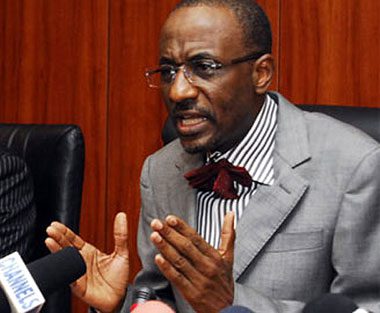
CBN Governor, Lamido Sanusi


Contrary to the recent drop in the value of the nation’s external reserves, the Central Bank of Nigeria on Monday dismissed claims that the reserves were experiencing sharp decline, adding that the current value of $46bn showed that the fundamentals of the economy remained strong.

The CBN Governor, Mr. Lamido Sanusi, said this at the opening ceremony of the regional course on reserves and foreign exchange management.

The course, which was organised by the West African Institute for Financial and Economic Management, was targeted at how foreign reserves could be optimised to generate income.

Sanusi, who was represented by the Deputy Governor, Operations, CBN, Mr. Tunde Lemo, said, “Nigeria’s foreign reserves have not been declining; our reserves level is about $46bn and that’s still very strong, which is approximately 11 months of imports.

“The fundamentals of the Nigerian economy are still very strong and occasionally, there might be increase or decrease, but it has been hovering between $45bn and $47bn, and that is very strong.

“In Africa, it is either the second highest or third highest. I think it is the second highest only after Algeria, and that’s really very remarkable.”

The foreign reserves had been hovering between $47bn and $48bn since February 20, 2013, when the nation recorded N46.96bn. The CBN data had shown that the reserves dropped from $48bn on June 28 to $47.6bn on July 2, 2013.

The $47.6bn reserves, however, represented about 30.5 per cent increase over the $36.6bn recorded on July 2, 2012.

On July 16, the external reserves dropped further to $46.99bn.

The Federal Government had at the beginning of the year targeted an external reserves balance of $50bn.

Sanusi also explained that in spite of the uncertainties in the global economy, which had made major economies to cut interest rates in order to provide market liquidity, Nigeria’s external reserves would be invested in a currency mix that would optimise returns for the country.

He also allayed fears about the uncertainties of the Nigerian economy,  stating that the country’s reserves, which currently stood at about $46bn, could finance about 11 months of importation.

The move to invest the reserves in other currencies other than the dollar, according to him, is necessary in view of recent events in the global economy that have driven yields to historical low levels.

He said, “A major concern among central banks in recent times is how to generate income from foreign exchange reserves without compromising the reserves management objectives of safety and liquidity.

“Liquidity and safety are far more important and they come before returns management.

The central bank boss said since the financial crisis of 2008, reserves managers had come under increased pressure to find ways of enhancing income.

This development, he noted, had made the CBN to diversify its reserves portfolios by investing in the Chinese Renminbi.
- The Punch
Read more...
Posted by Unknown |

Oil spills: Shell, communities negotiate compensation package


Shell officials on Monday began talks in Port Harcourt with representatives of the Bodo community on compensation and cleanup, five years after one of the worst oil spills in the country’s history, the Associated Press reported.

Some experts say two oil spills that started in 2008 led to the largest loss of a mangrove habitat ever caused by an oil spill, affecting about 30,000 people in the Niger Delta area since then, according to a London-based law firm, Leigh Day.

“These people, since 2008, are living on a creek of oil. You step out of the front door, you see oil, breathe in oil and toxic fumes,” said a lawyer, Daniel Leader of Leigh Day, representing about 15,000 people from the community that filed a lawsuit in 2012.

Although Royal Dutch Shell has admitted responsibility for the two spills, the impact has been disputed and will be the main focus of negotiations in Port Harcourt.

Royal Dutch Shell said a joint investigation team estimated that 4,100 barrels were lost in the two spills. That estimate is based on the initial investigations by representatives from the company and the local community, spokesman, Jonathan French, told the Associated Press.

“Having said all that, it doesn’t matter how much was spilled because the compensation will be based on the financial loss that people have suffered because of the spill in the lagoon, and that is a matter of dispute between us and the claimant,” he said.

Leigh Day said that 15,000 fishermen and 31,000 inhabitants of 35 villages were affected in and around the Bodo lagoon and its associated waterways.

The law firm said independent experts estimated between 500,000 and 600,000 barrels were spilled, devastating the environment that sits amid 90 square kilometres (35 square miles) of mangroves, swamps and channels.

“The majority of its inhabitants are subsistence fishermen and farmers. Until the two 2008 spills, Bodo was a relatively prosperous town based on fishing,” the firm said in a statement.

The spills had destroyed the fishing industry and environment there, it said.

“Those communities are still having water shipped into them. But it’s patchy, and we fear many of those communities are drinking from poisoned wells,” Leader said.

But Shell said such estimates were high.

French said the company did not have access to the area to clean it up and that not all oil spilled was a result of the company’s operations.

Shell blames most of the spills in the region on militant attacks or thieves tapping into pipelines to steal crude oil, which ends up on the black market.

Nigeria, one of the top crude oil suppliers to the United States, requires companies to promptly clean up oil spills but the policy is not enforced, according to the report.

Both parties have said they hope to reach an agreement by the end of the week.

Neither side would discuss possible settlement figures. Britain’s Guardian newspaper reported that the company was thought to be offering about $20m in compensation, while the villagers were seeking $200m.
- The Punch
Read more...
Posted by Unknown |

BPE, NERC discuss power firms’ transfer to investors

Minister of Power, Prof. Chinedu Nebo

Top officials of the Nigerian Electricity Regulatory Commission and the Bureau of Public Enterprises have met to work out modalities for the transfer of electricity companies carved out of the Power Holding Company of Nigeria to private sector investors.

The Assistant General Manager, Media, NERC, Maryam Abubarkar, confirmed this development in a statement made available to our correspondent in Abuja on Monday.

Present at the meeting, according to the statement, were the Chairman, NERC, Dr. Sam Amadi, and Director-General, BPE, Mr. Benjamin Dikki.

The meeting was held despite disagreements between the Technical Committee of the National Council on Privatisation and the BPE over the extension of time for preferred bidder for the Enugu Electricity Distribution Company, Interstate, to pay the 75 per cent balance of the bid price.

Although details of the decisions reached between the two government agencies could not be ascertained, Abubakar said the issues tabled at the meeting included the application of the Fit and Proper Guidelines and the business plans of the core investors.

Others were the framework for monitoring and enforcement of transaction agreements, and the formalisation of contracts pertaining to transmission, power purchase agreements, vesting contracts and gas supply agreements.

According to the statement, Amadi emphasised the importance of preparing grounds for a successful takeover by the investors.

He maintained that NERC would on its own strengthen the laid down procedures for monitoring and enforcement.

Amadi also stated that a priority of the commission was customer metering, without which, he said the industry could not stand.

The NERC boss said the owners of the new distribution companies would be required to adopt the existing metering scheme put in place by the commission or to provide a better alternative.

Another meeting has been scheduled for next week to review the Fit and Proper Guidelines as well as to agree on the mechanism for dealing with liabilities incurred post-handover, Abubakar said.

Eighteen electricity firms were carved out of the PHCN as part of the process to reform the electricity generation and distribution industry.

These included the Transmission Company of Nigeria, 11 distribution companies based on geographical coverage and six generating companies.

Out of the successor companies, core investors have emerged for 10 distribution companies and five generating companies. The process for the emergence of core investors for Afam Power Plc (a generation company) and Kaduna Electricity Company is currently ongoing.

While the prospective core investors have concluded payment for nine Discos, the payment for the Enugu Electricity Distribution Company has been shrouded in controversy.

The preferred bidder for the company, Interstate, owned by business mogul, Mr. Emeka Offor, failed to meet the August 21 deadline to complete the payment.

However, the privatisation agency has failed to invite the reserve bidder, Eastern Electric, being promoted by a former Minister of Power, Prof. Bath Nnaji, to take the slot as required by the privatisation rule.
- The Punch
Read more...
Posted by Unknown |

Terrorism: Police introduces biometric vehicle registration

Inspector General of Police (IGP), Mohammed Abubakar
The Nigeria Police Force  will from September  16, change the process of vehicle registration from the analogue Central Motor Registry to a digital Biometric Central Motor Registration   system.

The BCMR is a technological means of attaching automobile owner’s personal data to his  vehicle for proper identification and protection.

The Force Public Relations Officer, Frank Mba,  explained at a news conference on Monday in Abuja, that the new system was part of efforts in repositioning the police to effectively tackle crimes and terror.

Under the system, hand-held machine would be used to verify the particulars of vehicles, rather than manual checking.

“To effectively combat terrorism, prevent crimes, apprehend and prosecute offenders, the force will from September  16, change the registration process of vehicles from the old analogue CMR to new digital BCMR system,” Mba said.

He added that “the decision informing the introduction of the BCMR is against the backdrop of contemporary security challenges bordering on terrorism, high incidence of car theft, kidnapping and other crimes.’’

Mba said that the system was designed for forensic analysis where fingerprints could be matched or verified against registered fingerprints collected during the registration.

He stressed that the database would be made available to other sister security agencies.

“We are going to make the database open to our sister agencies. If for example other security organisations want to carry investigation and they needed to get information from our database, we will make the information available to them,’’  the News Agency of Nigeria quoted the FPRO  as saying.

According to him,   the new system is capable of capturing 20 million fingerprints per second, an equivalent of two million people at 10 prints per person.

“As a store of information, it will provide a one-stop forensic base for all manner of investigations which will greatly enhance policing in tracking missing cars and preventing crimes,’’ he said.

He added that the BCMR could grab still images from Close Circuit Television being installed in cities in the country and the footages could be used to apprehend suspected criminals, thereby enhancing personal and national safety and security.

Mba said that registration under the BCMR could be done at designated banks, online and police commands across the nation.

He said that motorists were expected to pay N3,500 to register their vehicles under the system, while owners of tricycles  and motorcycles  would pay N1,500  for the registration.

Responding to questions, the spokesman said that the BCMR was not a duplication of the registration being done by the FRSC but complementing the commission.

According to him, substantial equipment had been procured for the system as personnel have been adequately trained to man it.

On the deadline for the registration, Mba said that no time frame would be given for now.

“We will  not give a deadline for compliance,” he stated , adding that   the police had begun aggressive sensitisation on the need for motorists to migrate from the analogue CMR to the BCMR.

 “First of all, we want to encourage new car owners to register their vehicles under the new BCMR, instead of the CMR. We are also encouraging old car owners to migrate to BCMR not just for national security but for the safety of their vehicles,’’ Mba advised.

When contacted, the FRSC spokesman,  Jonas Agwu, said  he just heard of the police decision  for the first time.

The FRSC had  last year introduced a new number plate, which it said was attached to individual vehicles and their owners.

According to the Corps Marshal, Mr. Osita Chidoka, the introduction of the new number plate was also to enhance a comprehensive database for all vehicles in the country.

By implication, it was meant to guide against car theft and other criminal activities that could be perpetrated using vehicles.

The Corps had given end of September as deadline for the procurement of new vehicle  number plates.
- The Punch
Read more...
Posted by Unknown |

Nokia to sell handset business to Microsoft for 5.44 billion euros

Stephen Elop, CEO, Nokia Corporation 

Nokia was once the world’s dominant handset manufacture.
Two years after hitching its fate to Microsoft’s Windows Phone software, Nokia collapsed into the arms of the U.S. software giant, agreeing to sell its main handset business for 5.44 billion euros (N11.6 trillion).
Nokia, which will continue as a maker of networking equipment and holder of patents, was once the world’s dominant handset manufacturer but was long since overtaken by Apple and Samsung .
Nokia’s Canadian boss Stephen Elop who ran Microsoft’s business software division before jumping to Nokia in 2010, will now return to the U.S. firm as head of its mobile devices business.
He is being discussed as a possible replacement for Microsoft’s retiring CEO, Steve Ballmer, who is trying to remake the U.S. firm into a gadget and services company like Apple before he departs.
In three years under Mr. Elop, Nokia saw its market share collapse and its share price shrivel as investors bet heavily that his strategy would fail.
In 2011, after writing a memo that said Nokia was falling behind and lacked the in-house technology to catch up, Mr. Elop made the controversial decision to use his former firm Microsoft’s Windows Phone for smartphones, rather than Nokia’s own software or Google’s ubiquitous Android operating system.
Nokia, which had a 40 per cent share of the handset market in 2007, now has a mere 15 per cent market share, with an even smaller three per cent share in smartphones.
The sale of the handset business is not the first dramatic turn in the 148-year history of a company which has sold everything from television sets to rubber boots. But it was felt as a hard blow in its native Finland, even among hard-nosed investors who saw the sale as a final chance to salvage value.
“I have mixed feelings, because I’m a Finn. As a Finnish person, I cannot like this deal. It ends one chapter in this Nokia story,” said Juha Varis, Danske Capital’s senior portfolio manager whose fund owns Nokia shares.
“On the other hand, it was maybe the last opportunity to sell it.”
Mr. Varis was one of many investors critical of Mr. Elop’s decision to bet Nokia’s future in smartphones on Microsoft’s Windows phone software, which was praised by tech reviewers, but never caught on with consumers.
“So this is the outcome: the whole business for five billion euros. That’s peanuts compared to its history,” he said.
Finns lamented the decline of their former champion.
Finland’s minister for European Affairs and Foreign Trade, Alexander Stubb, said on his Twitter account, “For a lot of us Finns, including myself, Nokia phones are part of what we grew up with. Many first reactions to the deal will be emotional.”
It is also a pivotal moment for Microsoft, which still has huge revenues from its Windows computer operating system, Office suite of business software and the X-Box game console, but never managed to set up a profitable mobile device business.
Microsoft’s own mobile gadget, the Surface tablet, has sold tepidly since it was launched last year.
“It’s a bold step into the future — a win-win for employees, shareholders and consumers of both companies,”Mr. Ballmer said in a statement.
“Bringing these great teams together will accelerate Microsoft’s share and profits in phones and strengthen the overall opportunities for both Microsoft and our partners across our entire family of devices and services.”
The move leaves the Finnish company with Nokia Solutions and Networks, which competes with the likes of Ericsson and Huawei in telecoms equipment, as well as a navigation business and a broad portfolio of patents.
(Reuters/NAN)

Read more...
Posted by Unknown |

UNDERSTANDING 21ST CENTURY CULTURAL CHANGES: A PANACEA FOR AFRICA's LEADERSHIP AND ECONOMIC RENAISSANCE (2)


Last week, we discussed extensively on the issues and events that precipitated life in the 21st century. This week, we will take a closer look on these events and understand how our current challenges as a continent came about.
1. The birth of the worldwide web ( The Internet): By 1984, the internet was a means of communication amongst the military and intelligence community of the western world. With the creation of the world wide web, the world became a global village thereby making the speed of change supersonic. The internet also gave birth to Information Communication Technology (ICT). The downside for economies in africa is the fact that more jobs would be done by computer, thereby making the 21st century a job unfriendly century. That’s why if you are on a job and you are unable to generate value and sustain customers, you could be sacked. This also made the importance of man as a means of production dwindle, making the world a more robotic society.
2. The fall of the Berlin wall: This wall was built physically to divide old Germany after the second world war (specifically into west and east). Thereby making America and the allied forces rule over the west and the soviet-union rule over the east. While the wall lasted, states like Nigeria lined behind America and cuba behind the soviet-union. This platform granted free meals to Africa, built universities, hospitals, electricity and virtually everything was free. For Nigeria at this period, the Naira and pound were at par.
 By the time the wall fell and the implication was that the western world began to withdraw the subsidy, then our currency dropped, other assistance were withdrawn, the universities lost standards. The fall brought economic retrogression to the continent.
3. The release of Nelson Mandela: he was a prisoner for 27years. He was released by the effort and money of Nigerians in support. The moment he was released, the world shifted attention away from Nigeria to South-Africa. Before this time, 60-70% of all foreign direct investment that came into Sub-Sahara-Africa birthed in Nigeria, but now a large chunk of these investments go to South-Africa. Currently speaking, about nine of the world largest conglomerates are established in Africa, using South-Africa as an entry point and Nigeria as the market place. More so, Africa is seen more as a consumption continent. No wonder;
“The future of Guinness is in the Lagos bars” - Guinness plc.
The statement above is quite humiliating but happens to be true, following the ignorance and perpetual mediocre state of the African populace.
We must stand against mediocrity and accept responsibility for ourselves, nation and continent
    Practically speaking, our leaders, politicians, should be empowered to understand life in the 21st century, the impact of South Africa on African countries and their economies. Our politicians need to be trained to help strengthen their foresight in order to stop playing childish games. Please refuse to be ignorant and make adequate, sincere plans to secure one generation by placing life in the right perspective for a sound take-off, stop religion, access your culture, embrace truth, renew your values, and be determined for continental success.
“There is no mountain anywhere, every man’s ignorance is his mountain” - Dr. David Oyedepo.
“Every generation has problems and challenges, which makes that generation specially assigned to solve its problems. Refusal to solve or being ignorant about these problems would rob generations to come, the privileges they should enjoy”  -  Obele Gospel Jesuite
I wish you a great time this week as I hope to see you next Monday. Cheers !                                                                    

Obele Gospel Jesuite is the Chief Responsibility Officer- Project Change Initiative (PCI), and a proud 21st century development economist. He can be reached at 08130070991, Gospel_obele@yahoo.com

Read more...
Posted by Unknown |

NLC To Resolve ASUU/FG Face-off

NLC president, Comrade Abduwaheed Omar

The Nigeria Labour Congress (NLC) yesterday said it will ask the Academic Staff Union of Universities (ASUU) to resume negotiation with the Federal Government for the resolution of their differences.

NLC President, comrade Abdulwahed Omar, spoke after the union’s National Executive Council (NEC) meeting in Abuja.

He said there were reports that the union had issued a statement to withdraw from the negotiations with the Federal Government.

Omar said: “Congress resolved at the meeting that we are also going to make consultations to ensure that the negotiations resume immediately. We want to ensure that they are resumed to resolve the issues, not to resume and continue to dangle around without making any headway. We are also going to study the situation and make some proposals.

“But we, at the meeting, also did deliberate on one or two other issues, particularly on the issue of strike by the Academic Staff Union of Universities (ASUU).

“We are all aware that ASUU has issued a statement saying it will withdraw from the negotiation with the Federal Government following the government’s failure to make a headway in the negotiation.

“According to the paper I read, it was also due to the lack of seriousness on the part of government concerning the negotiation. I think it is a very serious situation we are facing today, that we allow the lecturers to remain on strike for upward of two months without resolving the issues. I think it is a very serious issue.”

Interior Minister Abba Moro yesterday urged ASUU to reduce its demands. .

He said university students should also advise their teachers to review downwards their demands and yield to government’s position.

The minister spoke in Abuja when he received officials of the National Union of Benue State Student (NUBSS).

He said: “I assure you that the ongoing strike is one that the Federal Government is tackling headlong. In spite of the problems that have hindered further discussions, the government will continue to explore all avenues that are aimed at resolving the crisis in our universities, especially now that the government has given money to tackling all the problems in our universities for infrastructure.

“Since you are children, I expect that some of your teachers are also parents. The government is making efforts to let ASUU see things from the position of the government, expect that you too have a role to play as students.

“You must be in the position to advise and sometimes plead with teachers to take into consideration the future of the youth as leaders of tomorrow and mellow down on some of their demands…”

House of Representatives member Farouk Lawan has urged the Academic Staff Union of Universities (ASUU) to explore other means to resolve its differences with the Federal Government other than the ongoing strike.

The lawmaker said incessant strikes are detrimental to the country’s educational system and standard.

Lawan spoke yesterday in Abuja on the lingering ASUU action, which he said has dire consequences on the nation’s education sector.
- The Nation

Read more...
Posted by Unknown |

Pencom transfers N7bn NSITF funds to workers


Acting DG, PenCom, Chinelo Anohu-Amazu
The National Pension Commission has transferred a total of N7bn pension contributions of workers under the defunct Nigerian Social Insurance Trust Fund to the Retirement Savings Accounts of the contributors in line with the requirements of the Contributory Pension Scheme.

According to figures made available to our correspondent on Thursday, the N7bn has been transferred into 92,655 RSAs.

PenCom said it recently received 3,752 applications from Trustfund for the transfer of N242.44m to the respective RSAs of the contributors.

The commission said it had earlier reviewed and approved the transfer of N241.62m to the RSAs of 3,743 applicants.

“This brought the total amount and contributors for whom NSITF contributions were remitted to their RSAs to N7bn and 92,655, respectively,” it noted

PenCom said the remaining applications were rejected due to incomplete documentation, zero balance or duplicated applications.

It said that in order to fast-track the transfer of the NSITF contributions into the RSAs of the contributors, PenCom, in conjunction with Trustfund, initiated the matching of the RSAs records with that in the NSITF database.

The commission said in furtherance of the matching of the records, the guidelines on the transfer of NSITF contributions were further amended to accommodate this new activity.

Under the old pension scheme, the National Provident Fund was established by an Act of Parliament in 1961 to regulate private sector pension schemes in the country. It ensured monthly contributions from the basic salaries of workers and their employers’ contributions.

The NPF was later converted to a limited social insurance scheme and administered by the NSITF from 1993.

However, through the Pension Act of 1979 and the activities of the NSITF, pensioners were subjected to difficulties as a result of the non-payment of their pensions.

This scheme was not funded, which led to mounting pension liabilities, and made it to become unsustainable.

The development led to the repeal of the 1979 Act and subsequent amendment of the NSITF Act of 1993.

The Pension Reform Act 2004 was promulgated and it established a contributory scheme for the payment of retirement benefits of employees in the public service of the federation, the Federal Capital Territory and the private sector.

The President, Pension Fund Operators of Nigeria, Mr. Dave Uduanu, said that the CPS had been recording some achievements.

He said that the PRA 2004 was also being reviewed.

According to him, the PFAs are jointly working to ensure that they improve the pension industry for the benefit of the pensioners.

He said the operators were looking at having a shared services platform for the industry in order to reduce areas of duplication.
- The Punch
Read more...
Posted by Unknown |

76 oil blocs dormant eight years after allocation

Minister of Petroleum Resources, Mrs. Diezani Alison-Madueke

The Department of Petroleum Resources has said that 76 out of the 77 oil blocks awarded between 2005 and 2007 are largely dormant.

The Director, DPR, Mr. George Osahon, said at a forum on the 2005-2007 licensing round in Lagos on Thursday that the Federal Government awarded a total of 77 oil blocks through three bid rounds in 2005, 2006 and 2007.

He, however, expressed worry that only one of the blocks was currently producing, while less than 30 per cent of the remaining 76 were actively working.

Osahon lamented the fact that majority of the operators were using the delay in the passage of the Petroleum Industry Bill as an excuse not to develop their fields, arguing that this was improper and a ploy to blame the government for their challenges.

He said, “In the last three to four years, nothing has been happening in Nigeria’s exploratory sector, while in the marginal fields sector, only eight fields are currently producing out of the 24 fields awarded to 31 successful companies.

 “Only one block is currently producing, while less than 30 per cent of the blocks are actively working; several Production Sharing Contracts have yet to be signed, bank guarantees yet to be put in place, work obligations not respected and downstream obligations not performed.”

According to the breakdown of the 2005-2007 licensing rounds, 14 of the 44 oil blocks awarded in 2005 are onshore, eight deep offshore and 11 located in the continental shelf, while the remaining 11 are located in the Chad Basin, Benue Basin and Anambra Basin.

Indigenous exploration and production companies got 65 per cent of the oil blocks awarded in 2005, leaving the remaining for foreign firms.

The DPR director further explained that 16 oil blocks were awarded in 2006 with indigenous operators taking 40 per cent.

Eight of the blocks are deep offshore blocks, three onshore, two in the Chad Basin, while the remaining three are located in the continental shelf.

Osahon explained further that another 17 oil blocks were allocated in 2007, nine of which are located onshore, one deep offshore and the remaining eight located in the continental shelf.

Indigenous operators got 85 per cent of all the oil blocks allocated in 2007, leaving the remaining 15 per cent to foreign operators.

Despite that, Osahon expressed regrets that only one of the fields had hit production.

He said that the Federal Government was concerned about the inability of the operators to meet industry targets for reserves and production capacity; limited activities in the oil and gas industry; and the implications for the industry’s vitality and social challenges.

Read more...
Posted by Unknown |

French to be part of UTME from 2014 – Minister

Minister of Education, Prof. Ruqayyatu Rufa’i

Minister of Education, Prof. Ruqayyatu Rufa’I, said on Thursday in Abuja that French language would be part of the Unified Tertiary Matriculation Examination as from 2014 for interested candidates, the News Agency of Nigeria reports.

Rufai said this at  a reception held in honour of the French Language Project Manager, Mr. Jean-Phillipe Roy.

She said that being multi-lingual in the 21st Century was essential as it helps individuals to operate more effectively in the international community.

“For Nigeria, the study of French language is quite key, considering the fact that our neighbouring countries are French-speaking. Apart from the English language, French language is one of the major international languages,” she said.

She said Roy came to Nigeria in 2009 under the second Bilateral Agreement between Nigeria and French.

The minister noted that the French had worked hard to ensure that various components of the project received due attention.

Rufa’i lauded his contributions to the reform of the UTME for 2014 in addition to the scholarships awarded to 16 teachers of French language to study in France for one month.

She said the project manager’s contributions included supply of books to schools, award of Master’s degree in French as a foreign language and supply of DVD and CD player to the project office.

The minister lauded the support of the French Government to the Nigerian French Language Village, Badagry, Lagos; and the Regional Network of French Language centres in Africa.

She also commended the Association of French Language Teachers, and noted  the proposed handing over of the project vehicle to the ministry for the monitoring of the teaching and learning of the language.

“Nigeria and France have come a long way in their relationship. It is a relationship built on mutual respect, cooperation and interest. I wish to assure you that the ministry will continue to be committed to the teaching and learning of French Language in Nigeria and sustenance of the cordial relationship,’’ she said.

Roy praised the collaboration between the Federal Government and the French Government.

“Since I have been here, you have shown a lot of interest in what we have been trying to do in terms of decision-making in critical issues and, with your help, we have been able to keep the project on the right track,” he said.
- NAN
Read more...
Posted by Unknown |

Heirs Holdings acquires stake in offshore drilling firm

Mr. Tony Elumelu
Mr. Tony Elumelu, Chairman, Heirs Holdings

Heirs Holdings has acquired significant stake in Seadrill Mobil Units (Nigeria) Limited, a West African affiliate of New York listed global offshore drilling company, Seadrill.

As a result, the Chairman of Heirs Holdings, Mr. Tony Elumelu, according to a statement on Thursday, has been appointed as chairman of the board of Seadrill Mobil Units.

The statement added that the investment was a further evidence of Elumelu’s strategy of increasing African business participation across the oil and gas value chain, and complement existing interests in oil and gas production and exploration.

Seadrill, the world’s leading offshore driller, is listed on both the New York and Oslo stock exchanges, and operates the second largest ultra-deepwater fleet and largest premium jackup fleet in the industry with 7,500 employees in 15 countries.

Commenting on the investment, Elumelu was quoted to have said, “Seadrill is a significant player in the oil and gas space, with a strong track record and one of the most respected names in the industry. The partnership makes strong commercial sense, bringing together a major global player and a leading African participant in the oil and gas industry.

“Successful development of Nigeria’s deep water oil and gas fields is of strategic importance to our country. This is an important part of our own approach of creating synergistic added value investment across the energy sector, from extraction to processing, and perhaps most importantly for Nigeria, industrial production and power generation.”


Read more...
Posted by Unknown |

UNIDO seeks more investment in agriculture

Minister of Agriculture, Dr. Akinwumi Adesina

The United Nations Industrial Development Organisation on Thursday called for a more pragmatic approach that would help to stimulate the growth of agribusiness in Nigeria.

The UNIDO Regional Director and Representative in Nigeria, Dr. Patrick Kormawa, made the call in Abuja while speaking at a two-day workshop on the development of policy guidelines to engage women and the youth in agribusiness.

He said the approach should be anchored on youth and women entrepreneurship as this would help to promote modern form of agriculture.

This, he noted, would help to resolve the economic, social, cultural and security challenges currently facing the country.

Kormawa said, “Over the past 10 years, the number of youths aged 15 to 24 in Africa has increased from 133 million to 172 million. It is projected that by 2020, that figure is expected to rise to 246 million. This youth bulge could significantly tilt the current social dynamics positively or in a negative direction as shown in the recent North Africa uprisings.

“It is now widely recognised that inclusive growth and development, job creation, significant reduction in unemployment and poverty must be addressed simultaneously to achieve the sustainable growth and development we all want.

“Investing in agribusiness has been singled out as one way to achieve prosperity in Africa. However, stimulating growth of agribusiness is anchored on youth and women entrepreneurship.”

He added that effective participation of the youth and women as entrepreneurs in the agric sector was essential for job creation, poverty alleviation, gender equality and economic empowerment.

Kormawa said, “There are several programmes and projects working to support youths and women in agribusiness. Our experience from several African countries shows that despite the huge investments to this effect, the number of youths taking up agribusiness as profession is not commensurate with the investment.

“In other words, the number of sustainable and decent jobs created in agriculture has not been encouraging, particularly for the educated youth. For this to happen, agriculture needs to be profitable and must provide dignity for women and youths.”

The Minister of Agriculture and Rural Development, Dr. Akinwumi Adesina, said the workshop was particularly relevant in view of the high unemployment rate in sub-Saharan Africa.

The minister said having recognised the recent youth restiveness, security challenges and the abject poverty facing women, the government had decided to revitalise its employment generation strategies to solve the problem of youth unemployment and gender equality.

He said, “With the high involvement of women in agriculture, developing the sector and improving access to productive resources for women is the surest way to achieve food and nutrition as well as other Millennium Development Goals.

“Therefore, we must have the political will to channel the required resources to youth development in order to set Africa on the path of sustainable development.”

Read more...
Posted by Unknown |

Central Bank’s policy has negative impact on industry earnings – Access Bank

CBN Governor, Sanusi Lamido Sanusi

              Access Bank had its 2013 half year investor presentation.
The Central Bank of Nigeria’s policy on the increment of Cash Reserve Ratio (CRR) on public funds deposited in banks is taking its toll on the banks.
Access Bank, one of Nigeria’s banks, licensed by the Central Bank of Nigeria as an International Bank, highlighted the impact of this policy in its 2013 half year investor presentation released last week.
According to the bank, the CRR on public sector of 50 per cent (from 12 per cent) in the third quarter of 2013 is having a “negative impact on the Nigerian banking industry earnings” adding that there is an “increased pressure on the cost of funds for banks”, given the reduced dependence on banks on public sector deposits.
The bank said that compliance with this policy would impact on its earnings an estimate of N3 billion in 2013.
The bank also highlighted other pressure points on banks’ earnings which include the Central Bank’s revised guide on bank charges. These include the COT which was reduced from N5 to N3/million in 2013, and to be completely phased out by 2016, the interest on savings which was increased to 30 per cent of MPR: and 3.6 per cent paid on savings from about 1 per cent.
The bank said these policies are having “Increased pressure on non-interest income for Nigerian banks and that the estimated impact of these on Access Bank’s earnings is about N6bn in 2013.”
Another issue it lamented was the increase in AMCON Charge. There was an increase in banks’ AMCON levy from 0.3 per cent in 2012 to 0.5 per cent of total assets in second half of 2013. The bank said this move would only end up increasing banks’ cost base. It said the impact on Access Bank’s Opex was estimated at N7.2 billion in 2013.
Highlights of 2013 half year result
The bank’s Net interest Income (NII) declined by 29 per cent to N39 billion year-on-year but up 29 per cent to 22 billion from 17 billion quarter-on-quarter. Net Interest Margin (NIM) improved by 60 basis points (bpts) from the depressed first quarter 2013 level to 6.8 per cent in second quarter (QoQ), Non-Interest Income was up N5.3 billion or 20.9 per cent YoY to N30.7 billion and down N6.9 billion or 36.7 per cent QoQ to N11.9 billion, Operating expenses up N5.4 billion or 11.2 per cent YoY to N53.8 billion and N4.4 billion or 17.8 per cent QoQ to N29.1 billion, while the contribution of Non-Interest income to gross earnings increased to 30 per cent in first half 2013 from 23 per cent.
Profit Before Tax (PBT) declined by 13 per cent to N26 billion in half year 2013 but increased by 36 per cent to N15 billion QoQ. Funding cost increased by 16 per cent in half year due to high interest rate environment, loan growth of 11 per cent from N623 billion in Q1 to N691 billion in Q2, 14 per cent reduction in interest income from earning asset resulting from sale of AMCON bonds in second half year 2013 and non-interest income declined by 36 per cent QoQ as a result of significant non-recurring dividend income from Q1.
Key drivers of the half year results, according to the bank, include growth in interest expense due to high cost of funding due to high interest rate environment. The growth was driven by increased transaction volume, strong dividend income and good trading performance; significant decline in premium income from WAPIC (Insurance) (seasonality), increase in AMCON surcharge and other non-recurring expenses such as additional NDIC premium, (N568 million) claim expenses by WAPIC (N1.3 billion), depreciation adjustment (N768 million), professional fees and branding cost (N560 million) and card charges (N600 million) among other parameters.
Covering up anticipated earnings shortfall

With these anticipated shortfalls in banks’ earnings due to varying regulatory policies, Access Bank highlighted set targets for second half 2013, as well as paths to which it can improve it services to its customers and attract new ones, while hoping to generate more earnings doing so.
The bank said Personal Banking is one of the focus of its growth priorities and it intends to upgrade telemarketing centres to improve customer contact (up 90 per cent) from once in 2 months to once every month, improve cross selling, increase product penetration, increase alternative channels such as online banking, verve banking centre and mobile banking to drive transaction activities, generate fee income and focus on growing low cost deposits whilst increasing customer base.
On growth projection, it intends to reactivate 500, 000 dormant accounts, increase active internet banking users from 100, 000 to 500, 000; 40,000 walk in customers monthly, Grow Salary Account by additional 250, 000. Also, it hopes to achieve a loan growth of N10 billion by 2013 financial year end (Personal loans: 2 billion, Credit Cards: 2.5 billion, Vehicle finance: 3.5 billion, Mortgages: 2 billion) and an income uplift of N1billion among a series of other strategies.
Despite these odds, the Central Bank’s policy is here to stay, at least, in the short time.
Ayodeji Ebo, a Research Analyst at Afrinvest, an investment bank, said there was pressure in the market following the policy announcement, as banks scrambled for funds to meet the new Central Bank’s requirement. The Cash Reserve Requirement (CRR) on public funds was raised to 50 per cent, thereby necessitating a sell down on investments where these funds have been invested.
He said the Central Bank is worried about banks’ practice of sourcing public sector deposits at fairly cheap rates and lending the same to government via its fixed income securities, at higher rates. So basically, they collect money from the government and borrow the government via treasury bills and so on. According to him, the banks will have to call back their funds from the sources they have invested in and source for more deposits; at perhaps, higher rate, to comply with the policy.
Government’s deposit with the Central Bank is currently estimated at N2.6 trillion with federal government constituting 50 per cent (N1.3 trillion) and State and local governments approximately 20 per cent of N1.3 trillion.
Mr. Ebo said bank’s lending rates may rise due to the development, but they may still remain in the 20’s, as lending rates have proven over time, to be inelastic to changes in market dynamics.
“It is a further contractionary measure by the Central Bank. The impact of this policy will quarantined an additional 38 per cent of bank’s deposit from the public sector, as they already have 12 per cent as reserve across all their deposits. Hence, the banks will need to sell down and raise 38 per cent of their deposit (from the Public sector),” he said.

Read more...
Posted by Unknown |

Cashless Nigeria: Banks reluctant to sign on cheque truncation applications

CBN Governor, Sanusi Lamido Sanusi

 Only a few banks have adhered to CBN’s directive.
Nigerian banks have not shown much eagerness to speed up the requirements of the Central Bank of Nigeria on cheque truncation, one of the fundamentals for a successful cashless policy which includes signing on cheque truncating applications.
The current cheque truncation regime is planned to reduce the cheque clearing cycle from T+2 to T+1. Cheque truncation is one of the instruments necessary for the actualisation of the cashless regime and it is just being implemented in Nigeria, in accordance with the Central Bank’s policy.
Recently, Nigeria InterBank Settlement Systems (NIBSS) and Nigeria’s leading financial services software provider, Precise Financial Systems, PFS, collaborated with the Central Bank to achieve the cheque truncation exercise across the 37 branches of the Central Bank in states capital in Nigeria including the Federal Capital Territory, Abuja.
According to the firm, as of today, only a few of the banks including Sterling Bank, FCMB, Access Bank and Mainstreet Bank have demonstrated this readiness when they recently signed on iTeller, an indigenous cheque truncation application.
The iTeller application is a suite of integrated solutions that comprises Automated Teller Machine (ATM) based self-service cheque lodgement, cash lodgement/withdrawal and cashier’s desktop transport cheque scanning system for a state-of-the-art and an end-to-end branch level cheque truncation capability as well as a slip-free banking experience.
The iTeller application is presently a T+0 ready system with an ultra violet cheque scanning ready solution.
In a statement signed by Yele Okeremi, Managing Director, PFS, the company running the iTeller application, the platform provides an optimal mix of both hardware and software for capturing, through in-built scanner and processing of cheques presented by customers for lodgement while the design concept ensures a proper handshaking with the bank’s core banking application.
“The cheque truncation is already on. The latest and most remarkable achievement is the signing on of iTeller by the Central Bank, the regulatory agency behind the cheque truncation policy. Coming on the heels of that is the signing on of Sterling Bank, FCMB, Access Bank and Mainstreet Bank”, he said, adding that iTeller runs a simple model for cheque truncation processes and challenges the status quo.
According to him, with iTeller, banks now have access to the full compliments of its functionality, which include auto email alerts for back-office processing of remote cheque lodgement at ATM by customers.
“iTeller’s cheque truncation design makes it very flexible for any of these banks to decide whether to truncate its cheques at the branch level or cluster level. Any of the truncation models comes ready with a central processing centre that enables a bank to perform its central clearing cheque processing functions for both outwards and inward cheques”, he said.
He added that the application would give the banks the cutting edge in the industry, as they now have what it is required to implement cheque truncation as prescribed by the Central Bank, which is to reduce the cheque clearing cycle from T+2 to T+1.
According to him, the application was built to accommodate current industry practices while incorporating other foresights into future trends that would soon unfold in the industry.
iTeller has been in development for the past eight years, according to the firm.
Some of its features include branch-level cheque clearing, auto-generation of receipts at terminal point, auto-generation of capture file, accounting entries generation and posting, auto-generation of caution notices. Others are cheque images repository that would enable the banks to service their customers with respective cheque albums. the application provides an optimal mix of both hardware and software for capturing, through in-built scanner and processing of cheques presented by customers for lodgement.  The design concept ensures a proper handshaking with the bank’s core banking application.
The application offers flexibility in features and ease of usage, effectively meeting the banks’ requirement for customer service delivery, core banking double-entry postings, cheque-clearing processing and management information provisions.
The management of the firm said the company commenced the designing of the application at that time because it had foreseen that the prevailing situation today would in the medium term, become a reality.
With the dateline of June 2013 for all banks to become truncation compliant and ready, most of the banks are still in the process of selecting their service providers, according to industry watchers.
According to them, it is expedient for the banks to acquire good platforms and applications to enable hitch free cheque truncation processes.
- Premiumtimes
Read more...
Posted by Unknown |

Nigeria laments rising insecurity in Gulf of Guinea


Diezani Allison-Madueke, Nigeria’s Minister of Petroleum.
The Gulf of Guinea accounts for 27 percent of oil supply to Europe.
The Nigeria government on Wednesday lamented the rising insecurity in the Gulf of Guinea as a result of the activities of kidnappers, pirates and crude oil thieves.
The Minister of Petroleum Resources, Diezani Alison-Madueke, who was speaking at the First Nigerian Navy Offshore Patrol Vessel Africa Conference (OPV) in Lagos, said the development has resulted in many cases of hijacking, unauthorized vessel boarding and kidnapping in the region.
The Gulf of Guinea, which consists of 15 countries with oil production in excess of 5.4 million barrels per day in 2012, accounts for an equivalent of about 27 per cent of oil supply to the European Union and 29 per cent of total petroleum consumption in the United States in 2011.
Mrs. Alison-Madueke, who described the situation as unacceptable, said crude oil theft and illegal oil bunkering in the Gulf has become a major source of concern to the Federal Government, with U.S. Naval Intelligence Report indicating about nine hijacking incidents, 55 unauthorized vessel boarding, several kidnappings and vessels fired upon in the first half of this year.
The Minister, who was represented at the occasion by the Group Managing Director of the Nigerian National Petroleum Corporation, NNPC, Andrew Yakubu, underlined the significance of maritime security to the region, saying that it was necessary to maintain the flow of revenue from oil and gas.
She said that the current high insecurity had negatively impacted the region’s broader economic development, adding that maritime resources such as fish, aquaculture and the ecosystem which directly contribute to the livelihood of many Africans had been affected.
With Nigeria and Angola accounting for 47 and 34 per cent of the total oil supply production in the Gulf respectively, the Minister said it was extremely important that countries in the region and their allies collaborate to police the sea lanes, noting that disruptions in crude oil supplies not only affected countries such as Nigeria but ultimately negatively impacted the global economy.
Mrs. Alison-Madueke called for increased domestic efforts in addressing the menace, pointing out that addressing illegal crude oil bunkering was a multi-dimensional challenge that required a multilateral approach to succeed.
Mrs. Alison-Madueke noted that resurrecting the Gulf’s security protocol as well as collaboration between Nigeria and other countries in the region would go a long way to help address the maritime security issues.
The conference, which had as its theme: Delivering Maritime Security to Africa, was attended by Navy formations from countries in the Gulf with presentations from local and international resource persons.
- Premiumtimes
Read more...